
Spine Deformities
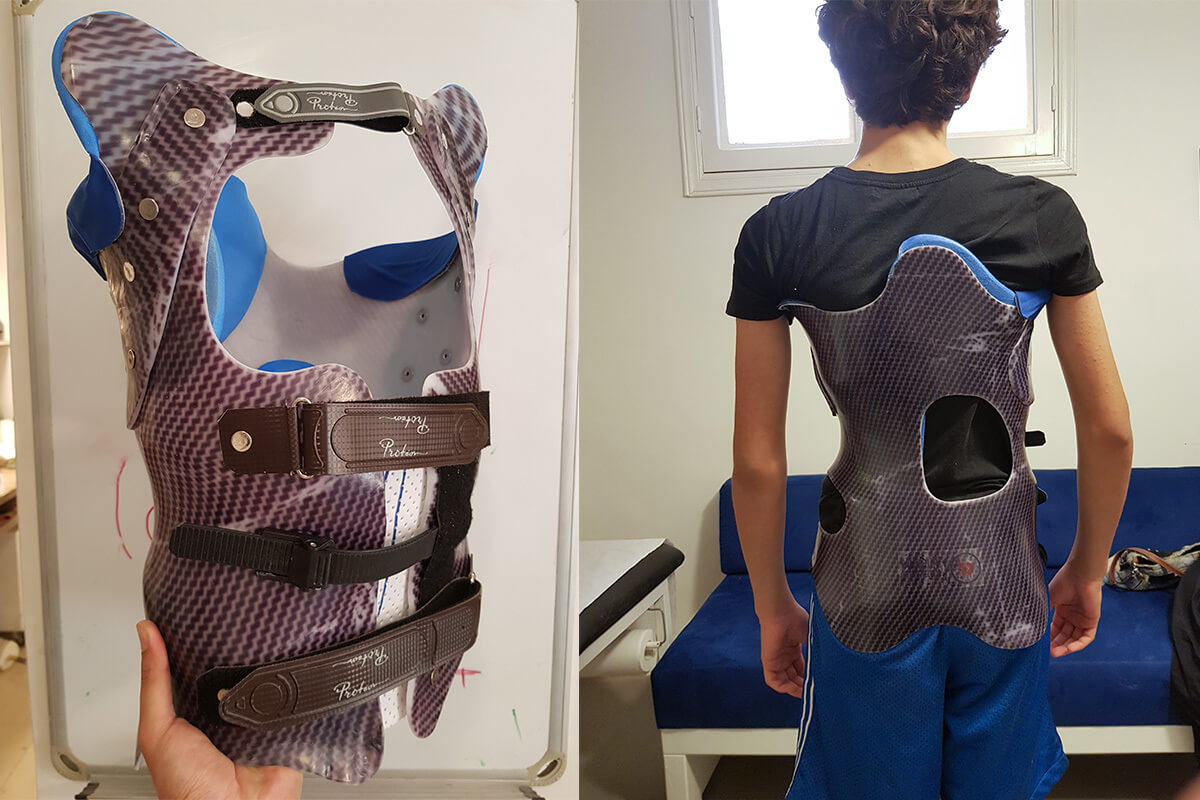
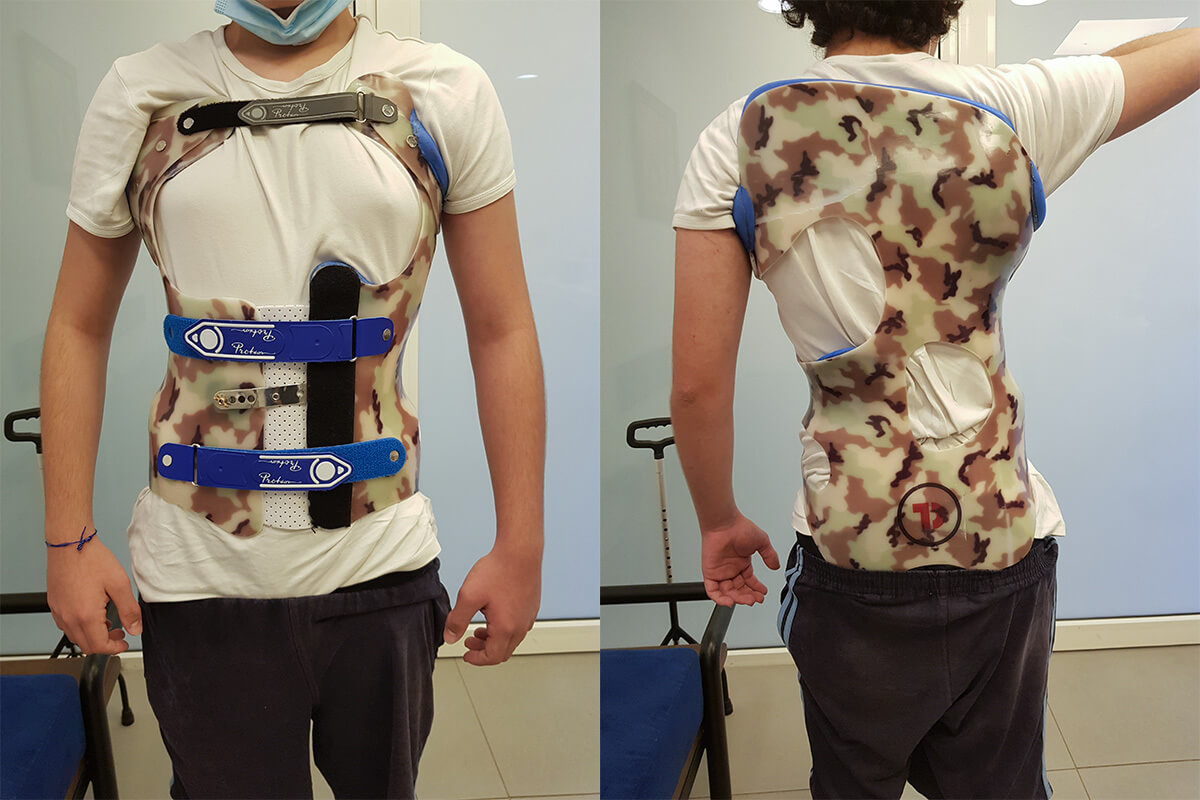
Spinal braces are a special kind of orthotic device. There are several reasons for a patient to need a spine brace, including post-operative care, acute injury, chronic pain, instability, degenerative disease or malformation of the spine. Spinal orthoses, which include neck and back braces, are used to support and stabilize and reduce pain through the various regions of the spine.
We custom fit a variety of custom and pre-fabricated spinal orthoses. Examples include:
• Scoliosis Brace
• Lumbosacral orthotics (LSO)
• Thoraco-lumbosacral orthotics (TLSO)
• Cervical Thoracic Orthosis (CTO)
• Cervical orthoses
• Back support
Scoliosis bracing
The spine is a flexible rod with viscoelastic properties, which give it a quality of deformability with shape memory.
The scoliosis is a three-dimensional deforming disorder of the spine, evolving in general until bone maturity.
Orthopedic doctors typically recommend scoliosis bracing for kids and teens who are still growing and have a curvature of 25 degrees or more. The primary goal of a scoliosis brace is to keep the curve from progressing to the level that surgery is required. Some patients achieve curve reduction with bracing.
Because it is normal to have a lot of question concerning the scoliosis bracing treatment, we prepared for you answers to the main concerns you may question in the following:
Spinal braces are a special kind of orthotic device. There are several reasons for a patient to need a spine brace, including post-operative care, acute injury, chronic pain, instability, degenerative disease or malformation of the spine. Spinal orthoses, which include neck and back braces, are used to support and stabilize and reduce pain through the various regions of the spine.
We custom fit a variety of custom and pre-fabricated spinal orthoses. Examples include:
• Scoliosis Brace
• Lumbosacral orthotics (LSO)
• Thoraco-lumbosacral orthotics (TLSO)
• Cervical Thoracic Orthosis (CTO)
• Cervical orthoses
• Back support
Scoliosis bracing
The spine is a flexible rod with viscoelastic properties, which give it a quality of deformability with shape memory.
The scoliosis is a three-dimensional deforming disorder of the spine, evolving in general until bone maturity.
Orthopedic doctors typically recommend scoliosis bracing for kids and teens who are still growing and have a curvature of 25 degrees or more. The primary goal of a scoliosis brace is to keep the curve from progressing to the level that surgery is required. Some patients achieve curve reduction with bracing.